Industry, Business & Companies ·
After Reading 105 Pages of Inside DingTalk, ONE's Failure Was Not the Most Painful Part
English translation of the Chinese original. This version is generated for international readers and may be refined over time.
English translation of the Chinese original. This version is generated for international readers and may be refined over time.
Date: 2026-06-05
Hello, I'm cxuan, the one who tortured each other with AI Agent.
Yesterday I read a 105-page PDF called "Standing In."
It's talking about nails ore.
According to the file, ONE was the primary AI project that was pinned down after returning without a trace. The birth began in April 2025, the launch was open on August 25th, and the peak DAU stabilized at around 3 million.
If you look at this introduction, it's easy to write it into a product reset:
An AI working stream.
An exclusive working secretary.
A new entry point for turning "person-seeking" into "job-seeking".
But reading the full document, my strongest feeling is:
ONE's the most sweet place it failed.
But it almost ran over the most difficult problems in AI's office product.
Not models, not interfaces, not cards, not just nails.
It's a lower question:
When AI enters the stream of work, is it helping people to take charge of their jobs or making them take charge earlier?
ONE wants to do, it's actually tempting
Let's start with justice.
ONE's heart is not bad.
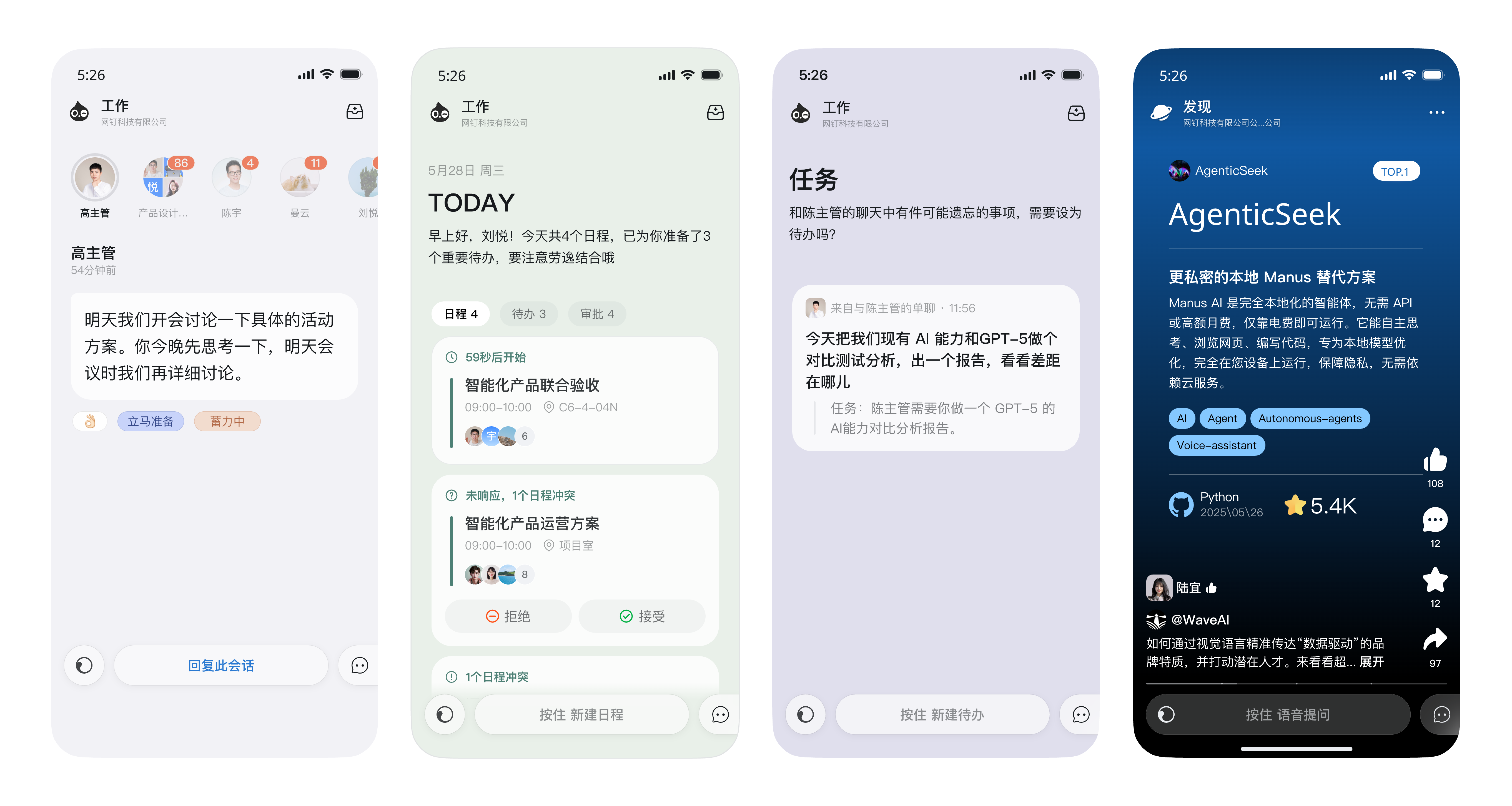
The nails are organized, news, calendars, meetings, approvals, to-dos, documentation. It's not just a chat robot or an AI sidebar floating next to the browser.
It's in real work.
It's important.
Because AI, if it's really helping people, it's not enough to talk on models. It needed to know which organization you were working with, which message was important, which meeting was left behind and which approval was stuck.
That's the nail card.
It has contact.
So, ONE, the first idea was set up:
Reassembly the job information that's scattered all over the place so that AI can look at it for you first.
Open in the morning, it tells you what to care about today.
After a long meeting, it helped you out of a bunch of unreadables.
Before work, it checks you for leaks, omissions, omissions.
In this direction, it's not dirt.
Even at the front.
During the same period, a number of AI products overseas are also moving towards active service. Not "You asked me to answer", but the system started to prepare on the basis of context before you asked.
The problem is, having access isn't equal to having a product.
And it's not the right product.
The first hole is too much heart
This PDF repeats a word: heart.
I understand why the product started.
ONE's heart has several layers.
It's trying to help the users down.
It wants to get nailed to the age of AI again young.
It wants to fight a new battle for a failed organization.
It also wants to find the scene of commercialization and token consumption.
Every single look makes sense.
Together, it starts twisting.
The fact that a product wants big DAU, high frequency behaviour, user willingness to pay, service managers, service general staff, relay press conferences, contribution group narratives is largely impossible.
There's a map in the document that's very direct.
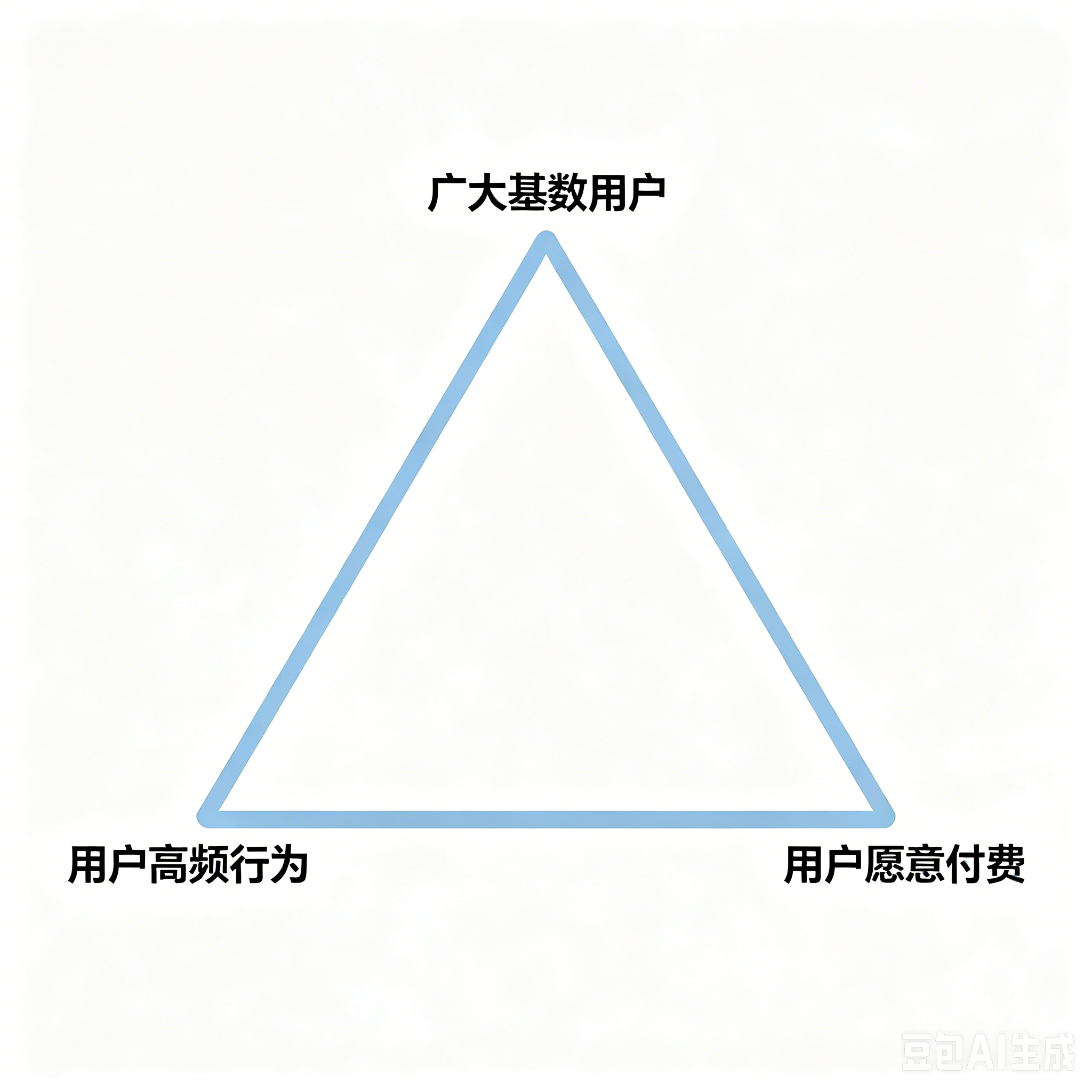
The large base number of users means that the product is light, broad and high frequency.
High frequency (HF) working behaviour means that it enters news, schedule, to-do, meetings.
The willingness of users to pay meant that it addressed deeper, more specific and more business-like issues.
That's the problem.
Light things don't necessarily hurt.
HF stuff, old nails can do it.
Deep things are easy to customize.
Onie's stuck in the middle.
It wants to be a portal for all, and it's hard to do one thing for any category of people.
It's a problem for a lot of AI products.
At first I felt like I could be an entrance.
Later it became clear that the entrance was the result, not the starting point.
You solve a problem that hurts enough before the users give you the entrance.
The biggest contradiction is who to speak for
ONE's real ambivalence, not technology, but position.
The nailed bottom gene is the sender's position.
Read unread, DING, attendance, approval, touch, which addresses certain concerns in the management of the organization:
Did you see what I said?
What I told you, did you go forward?
This logic has worked hard in the past.
But ONE is telling another story:
AI helps people lose weight.
AI help recipients filter noise.
AI lets important things float up.
Sounds sweet.
But as soon as it enters the old rules of nails, the taste changes.
The most typical is read.
In the traditional message list, the user can first see the group name, sender, last message and then decide whether to click in.
There's a buffer in the middle.
This layer of buffer is important for hitting workers.
It's not always the right place to sign off.
Some had to wait for the meeting to return, some had to confirm the calibre, some had to organize the language, and some were simply not psychologically prepared at the present time.
But ONE's card brought the message directly to your eyes.
See, it could have been read.
Read, start responsibility.
That's terrible.
The original "active service" became physically "active exposure".
An AI working secretary who was supposed to help the user down, suddenly became the sender's super-agent.
That's the key.
AI office products are not as proactive as possible.
Before taking the initiative, ask:
Who saved time for this initiative?
Who is to be held accountable in advance?
It's nice, but it's not a job to paint
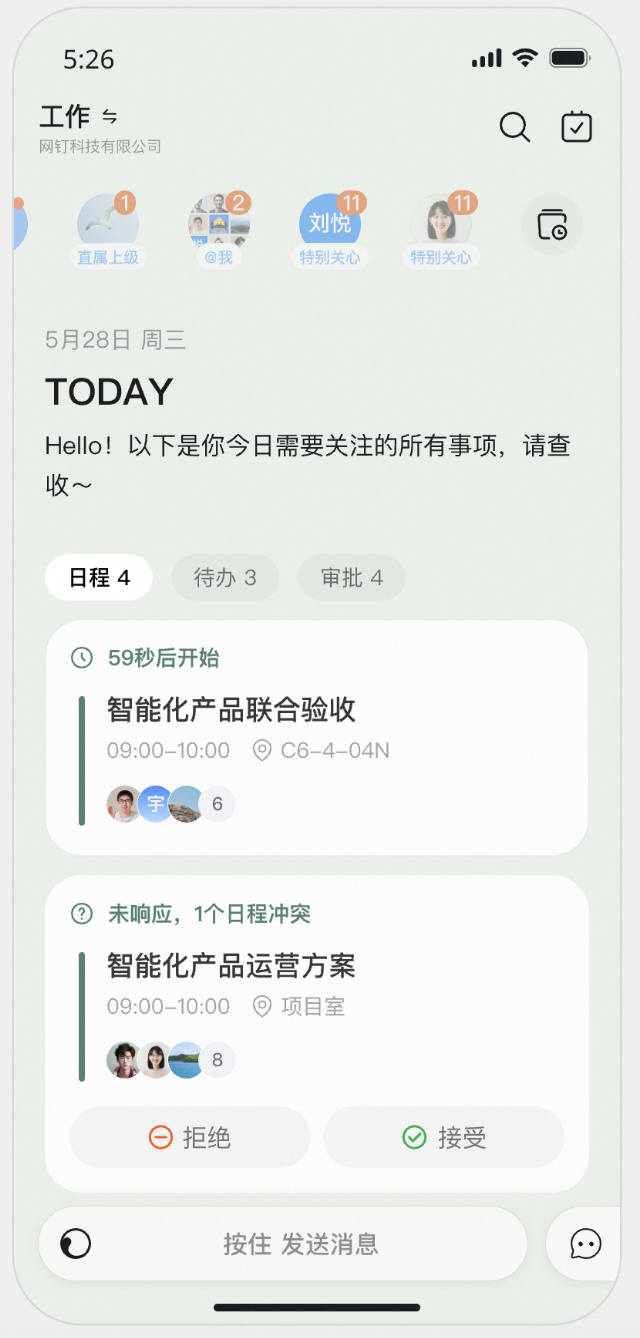
ONE chose the card form.
This choice is reasonable and dangerous.
What makes sense is that the cards are perfect for demo.
It's light, pretty, has an AI sense.
Messages, calendars, to-dos, approvals and discoveries can be compiled into a card, like the secretary putting the play on the table.
But the danger is:
Work is not a consumer content.
Take a short video, it won't come from you.
Take a Tinder card and they won't wait for your answer.
But there may be a colleague, client, boss, process behind every working card in the nail.
Approving appropriate cards.
Fields set, clear, agreed or rejected.
The schedule barely fits.
To-dos are also appropriate.
But the IM message is hard.
Because IM isn't just reading.
It also undertakes a range of hidden functions, such as identifying sessions, judging relationships, managing status, delayed response, marking unreading, and entering high-frequency group conversations with a sense of hand.
The old system is not necessarily elegant, but it can be expected.
Users know where the entrance is, know what the red dot looks like, know what happens when they get in.
If the new system simply rearranges old things, users will not migrate.
Particularly in enterprise software, "sufficiency" is itself a strong inertia.
That's ONE's awkward.
It makes a lot of AI judgments, but the front desk presents to users, often a new interface that is more beautiful, more proactive, but also more trusted.
Users do not know how many "Webline Logic Sutures."
He only felt:
Why would I slip a card again?
Will it read me already?
Is it accurate?
Why does it push me now?
The real problem is not a card, it's a reading and writing tube
There's a change in the document that I think is important.
The team later became aware that the design should not start with the card, but with the user action.
What is the user doing in IM?
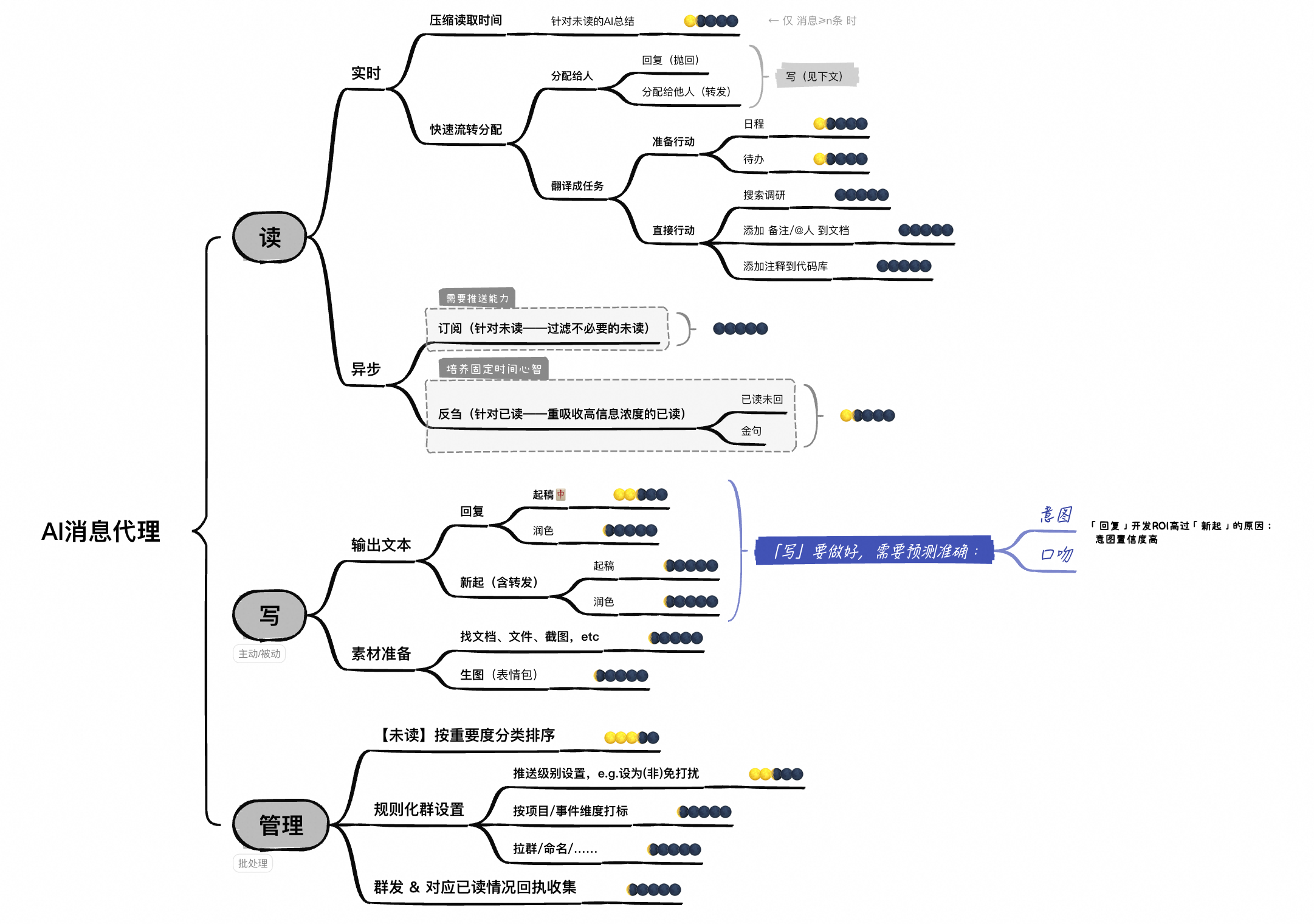
Three things:
Read the message.
Write a message.
Manage messages.
It's more solid than "doing an AI card stream."
Because it goes back to user behavior.
Read, which helps users to compress unread, judge importance, reverse readable information.
It can be drafted, polished, transliterated, translated and distributed to users.
Pipes, which help users identify group relationships, set priorities, and set sediment rules.
This is where AI really works.
Not to make the interface look more like the future.
It's about ripping out the user's mind-boggling, laborious, attention-intensive moves and seeing which one is actually captured by AI.
The document mentions that the AI response later obtained a better feedback and merged it with the nail to the main end and became a moving response.
It's interesting.
An ambitious new entry point for AI has not fully emerged, but has been left with a smaller, more specific and closer user action.
This could be the real path of a lot of AI products.
Don't rush into operating systems.
Let's do a high-frequency operation first.
The user says yes, not really good
The PDF user chapter is the part that I think deserves the most from product managers.
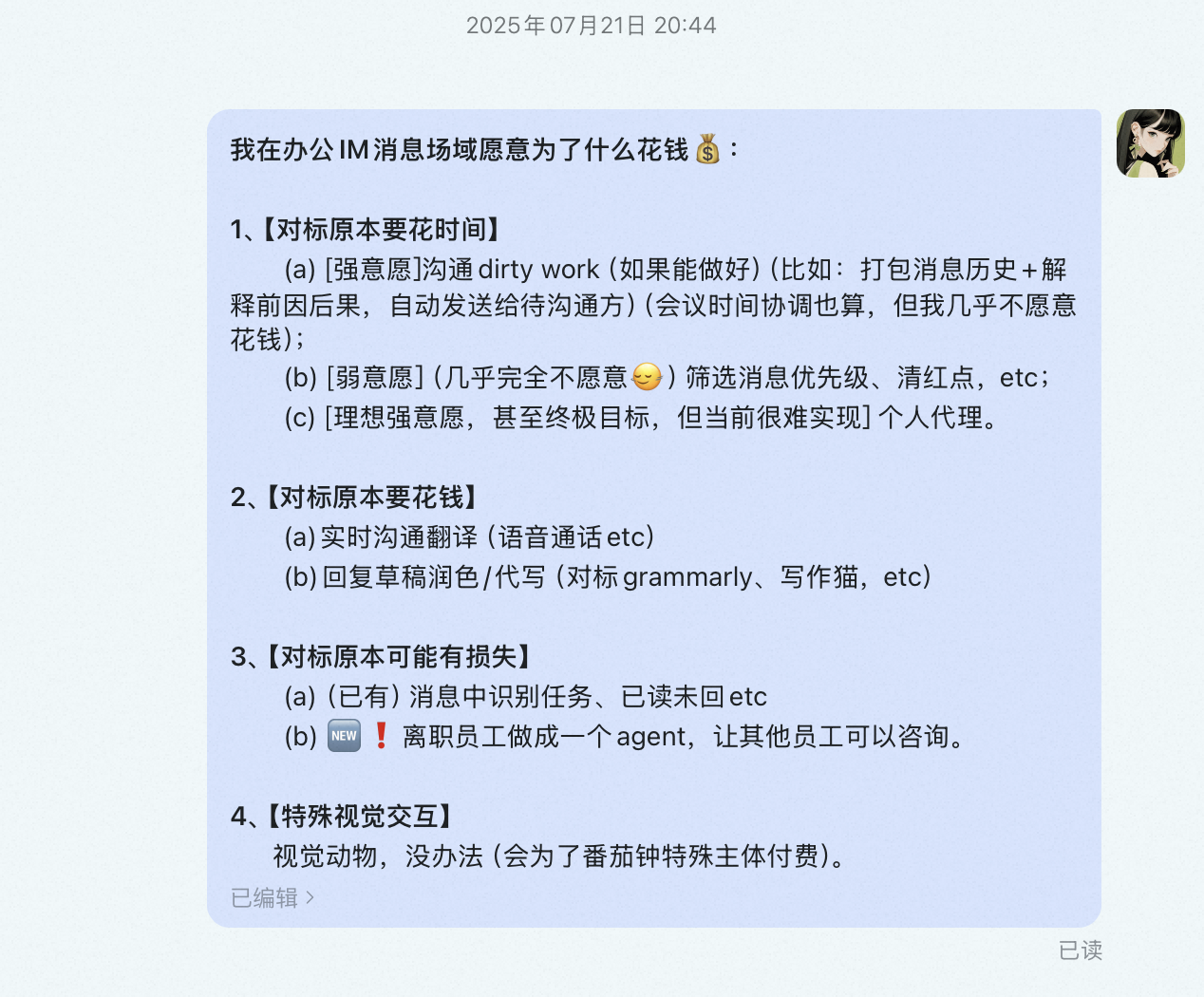
It separates the users.
A common user is not the same as a real user.
The owner's user is not equal to the average employee.
Internal surveyer is not the same as an official suit player.
It'll exaggerate your users, and it won't be necessary for you to migrate.
This is particularly obvious in ToB.
Those who pay, those who use, those who are affected are often not the same.
Boss pays, employees use.
Administrators open permissions to withstand process changes.
The sender is given certainty and the addressee is under pressure to respond.
So the user can be judged for accepting a product and not just for "good".
Depends on what he's willing to pay.
Would you like to order more?
Will you change your habits?
Would you like to hand over the team process?
Whether to take the risk of miscarriage of justice.
Would you like to move from old nails to ONE?
The most honest answer from the user, not in the mouth, in the cost.
This is too important.
Many of the AI products are researched to hear the following:
This direction has value.
It's almost useless.
The direction is valuable and users are willing to use it every day, at a distance of 18,000 miles.
Learning content is certainly valuable.
But when the user is processing the message, the schedule, the to-do, it is suddenly thrust into a discovery stream, and he feels the possibility not of value, but of disturbance.
AI Active service certainly has value.
But when the user is not ready to respond, the system reads the message for him, and it's not smart, it's uneasy.
Agility becomes consumption
The second half of this PDF is starting to get heavy.
Because it is not just about products, it is about organizations.
ONE's rhythm is fast.
There are bags every day.
Every day, you have to see changes.
The boss sees the problem, the team responds quickly.
That sounds like fast.
But the judgement in the document is very restrained and very restrained:
Agility, when it comes to learning, brings products closer to real problems.
Agility, if demonstrated, would make change faster for the team and make it more difficult to recognize the need for a new course of action.
The difference is too real.
What is really difficult is often not suitable for daily coverage.
Like personalization.
Like long-term memory.
For example, authority, audit, failure recovery.
For example, the feedback loop of important news.
Let the system learn, for example, what matters to me.
It's not easy to see them that day.
They don't have a nice button, and it's hard to tell the boss at night. Look, it's changed again today.
But they decide if AI's work product can go far.
If a team moves daily without getting closer to the right issue, it is not a quick call.
Call Ben Bo.
The nail didn't miss the end
When I read back, I didn't think the problem with nails was the wrong direction.
It's not wrong.
At the heart of EAI is indeed the organizational context, workflow, authority, access and implementation closed loop.
The nails do have assets.
IM, organizational structure, approval, calendar, meetings, forms, low code, Aliyun, syntax model, and a large number of corporate clients.
These are real things.
The file contains nails, flying books, corporate tweets, Google, Slack.
That's a good perspective.
AI did not create a new terrain.
We are all at war again in the old terrain.
The nail chassis is organizational certainty.
The chassis of flying books is knowledge and structured collaboration.
The bottom plate of the Enterprise Wireless is the Wireless Client Connection.
Google's chassis, it's Workspace.
Slack's chassis is the business dialogue site and Salesforce data.
The old genes decided on a new hit.
The nails naturally lead to organizational advancement, proactive service, communication and implementation.
This is the right way.
The problem is that final narratives are not a substitute for middle-level fighting.
You can see Agent OS.
But you have to win the next small battle.
Can the message be handled.
The schedule can't be closed.
Can the meeting be closed?
Is the form connected to the operating system?
I don't know if it's reliable.
Can the users trust you with a job?
If they're not on their feet, they're rushing to declare themselves the future and the product floats.
The launch will set the fire.
But what really leaves users behind is always a work stream that can be delivered.
And finally back to people
In the last chapter of "Standing in," the camera slowly moves back from ONE, nails, no moves, competitions and press conferences to the people who do what they do.
That's where I think it's most valuable.
Because, at the end of the product, if there is only "how to be more efficient" "how to be faster" "how to deliver faster", then people become fuel.
There is a page in the document about the long term.
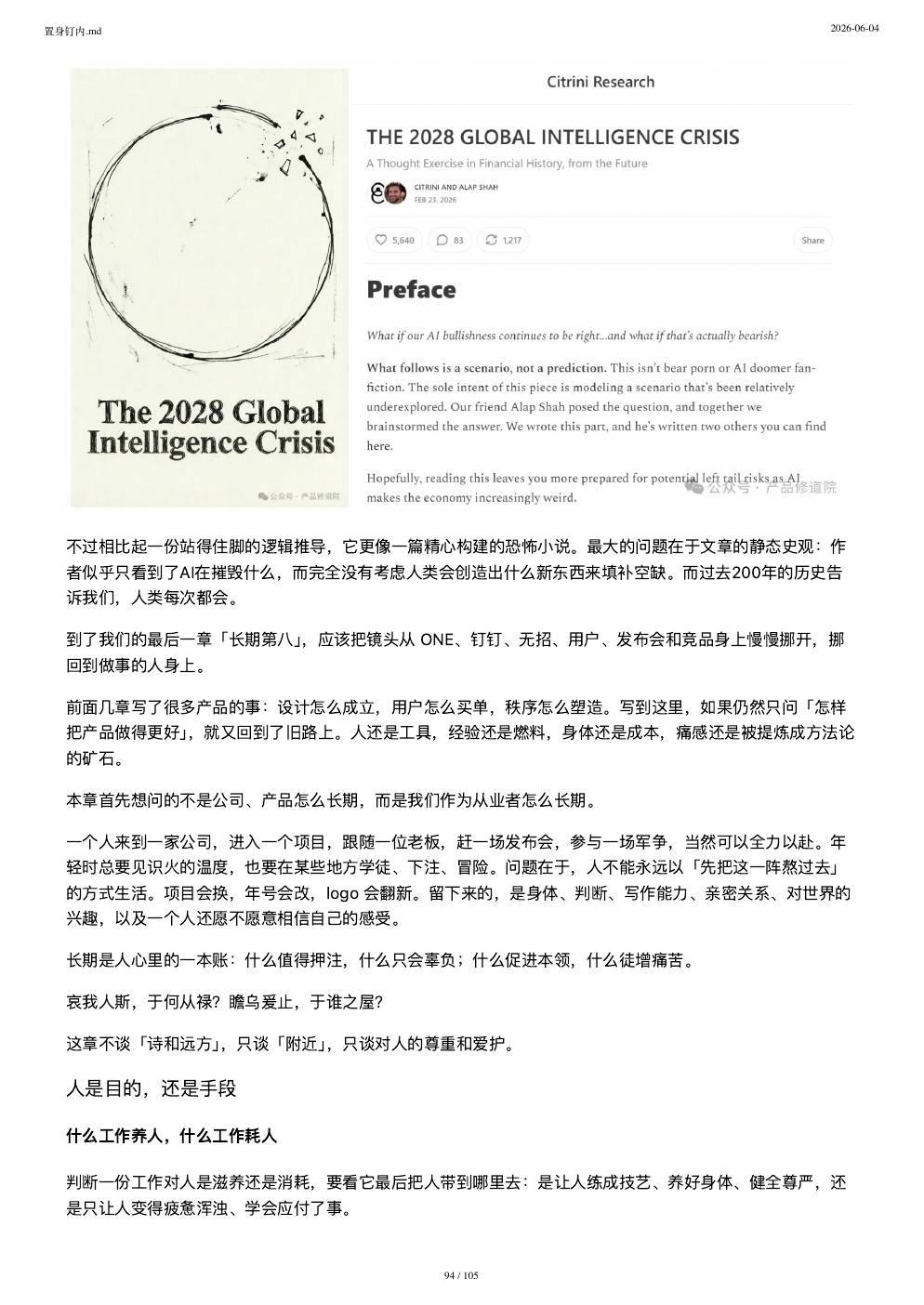
An organization can certainly be pressurized.
A project can certainly be sprinted.
A man can certainly burn for something for a while.
The problem is, there's nothing to grow after burning.
There's no longer a judgment.
There's no craftsmanship.
There's no more stable inside.
Is there a better understanding of users, systems, organizations and yourself?
If a job simply burns people down and does not make them stronger, then it is revalued.
That's the last thing I want to remember after reading this PDF:
Okay, AI work product, not for the system to find work earlier.
It's about getting users better at their jobs.
This can be sent to ONE.
It can also be given to all who are doing AI Agent, AI Office, AI Workstream.
Don't just ask if the model can do it.
And ask:
Who did it for?
Who does it cost?
Does it increase user control?
Is it making people more free, or is it making the system more compelling?
ONE is not necessarily a failed sample.
It's more like an expensive field experiment.
It proves that nails are really standing next to the key entrance to the Enterprise AI.
And it proves that the real hard part of AI's office product is never just to connect the model to the workflow.
Rather, it allows the model to enter the flow of work and still respects human boundaries, rhythms, responsibilities and judgements.
It's a lot harder than making a nice card.